Buccal and oral films – because what’s simple is also fast
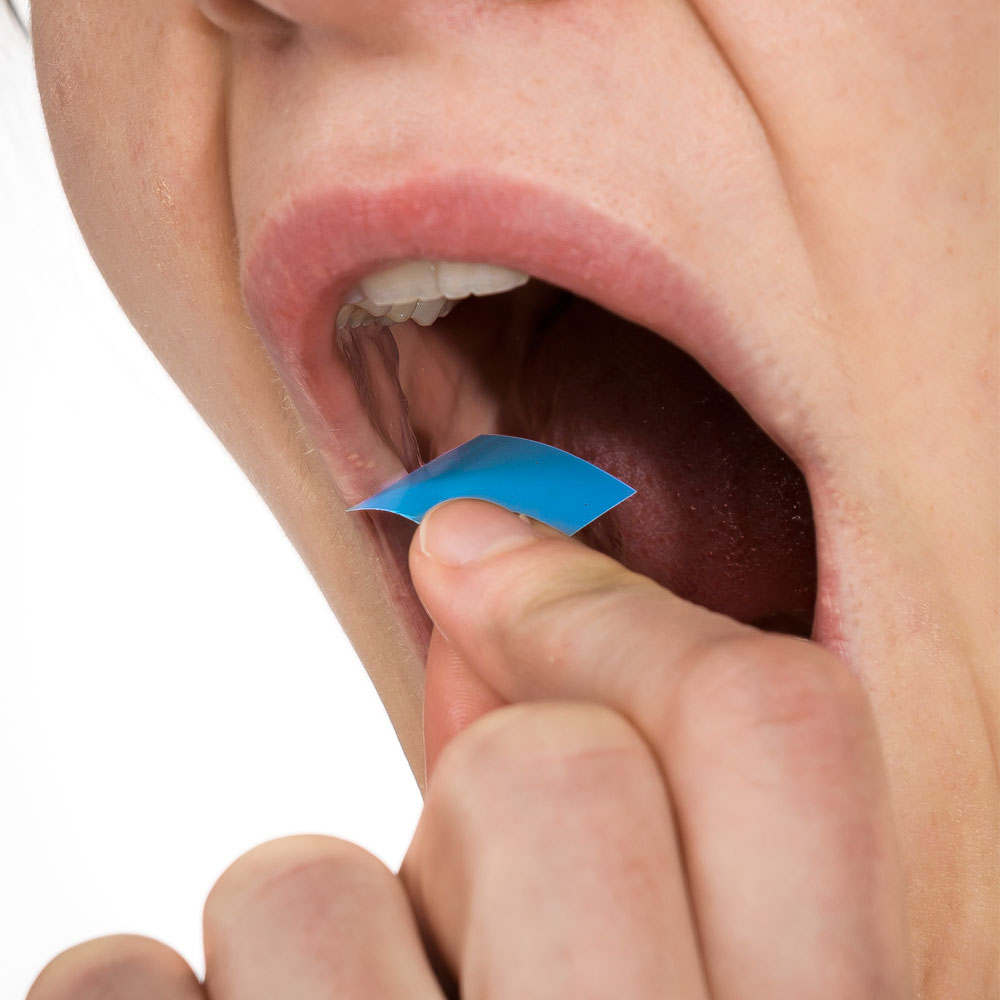
Buccal films are applied to the oral mucosa, i.e. the inside of the cheeks or the lips.
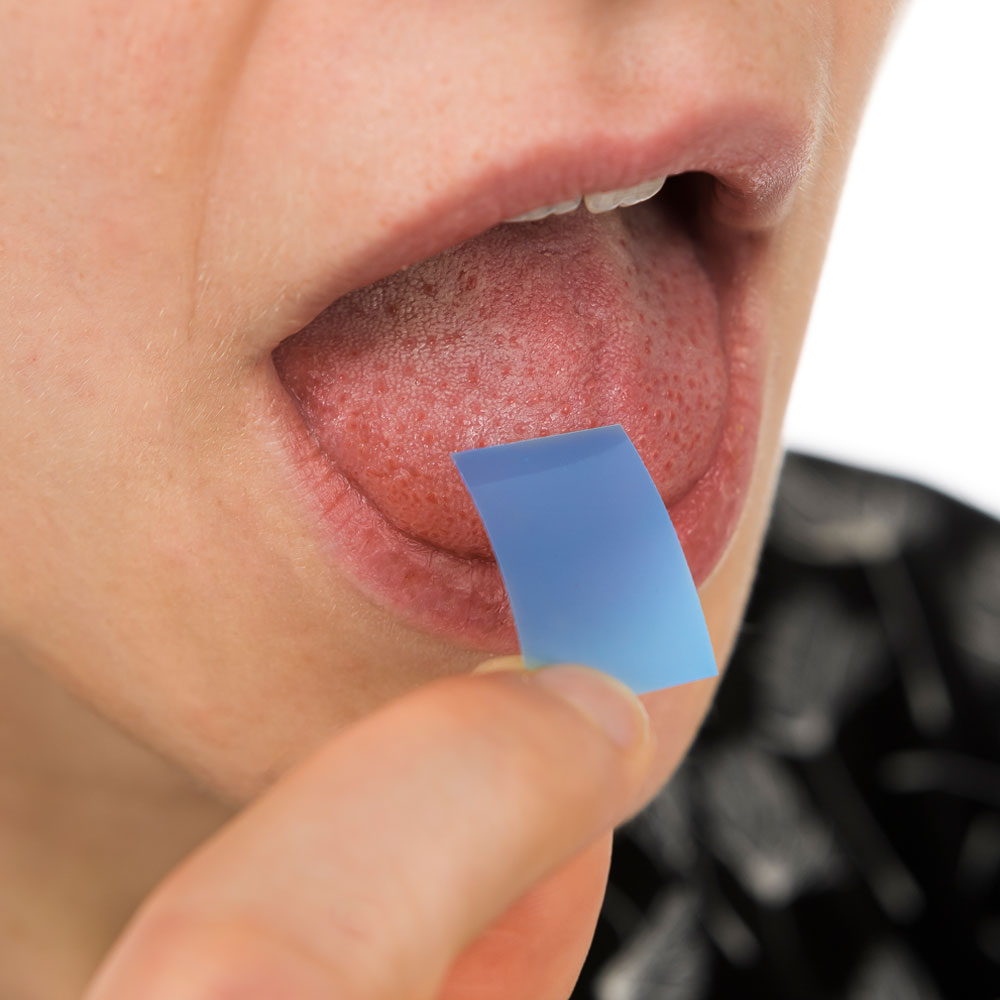
Oral films are placed on the tongue, either by the patient or someone helping the patient.
How films work Films can be used by the patient themselves or by someone helping the patient. SWIPP uses two forms of film technology: buccal films and oral films.
Buccal films Buccal films are applied to the oral mucosa, the inside of the cheeks. The medicine is absorbed through the mucosa (so-called transmucosal absorption) and passes directly into the bloodstream. This method avoids what is known as the first pass effect, which affects numerous pharmaceutical substances, reducing or slowing their uptake. Not all pharmaceutical substances are suitable for delivery through transmucosal absorption. Midazolam is suitable, however.
Oral films (ODF) Oral films are also called orodispersible films (ODFs). These are placed on the tongue where the film dissolves rapidly and the substance is carried down to the stomach by the normal flow of saliva, which can be as much as 1 mL per minute. The substance is then absorbed in the stomach in the same way as if delivered by a tablet. There is no absorption through the oral mucous membranes with oral films, but they are easier to administer than a tablet. Simple is fast, plain and simple. Because, if we include the time it takes to locate the tablets and fetch a glass of water – or buy a bottle of water, the film always wins that race.
Patents
SWIPP constantly evaluates the potential to apply for patents for inventions resulting from the product development. These may relate to compositions, manufacturing methods or methods of use. Sometimes a co-inventor from outside SWIPP may be involved (e.g. from our development and GMP partners), but the IP rights are always assigned to SWIPP through written agreements.
SWIPP has filed five patent families covering our product in major global jurisdictions.
Unique expertise cannot be copied Patents are not the only method used to protect the IPR resulting from SWIPP’s product development work. Some elements are best protected by the data or know-how being kept confidential. Upon subsequent product approval, e.g. in the EU or the US, the products may enjoy regulatory data protection. This means that should a competitor want to attempt to copy SWIPP’s work, they too must go through the entire development process and carry out all necessary studies themselves. Competitors are thus not allowed to apply for product approval solely by referencing SWIPP’s approval. They must prove that their product works, by conducting their own clinical studies.